


By Brooks York, AVP of Producer Services
Artificial intelligence is changing the game. While the positives outweigh the negatives, the technology presents many challenges. In the last week, I tried to explain to an older couple that while they were away, there were no mudslides in our home county; in fact, we are almost in a designated mild drought. They insisted that they watched it on the internet as it took out some houses and a major county road! The images and stories created by AI can be convincing. It helps to remember the words of our 40th president: “trust, but verify!”
While artificial intelligence is now often used to help understand market health and movements, the fundamental ideas and technical data are still driven by time-tested methodology. However, over the past weeks and months, some have started to question the role it plays in today’s commodity markets. So I went to my artificial friend (we will call him “Art”) with an experiment.
I asked Art to give me some song titles that match up with the current headlines. Within seconds Art was full of answers. His first offering was “Land of Confusion” by Phil Collins. That seemed like a logical choice given all the geo-political strife, but I needed Art to dig deeper and be more specific.
Soon, Art started talking about the commodity markets that we watch every day. “The Gambler” by Kenny Rogers flashed before my eyes. Now we were getting closer. It seems like agriculture producers are involved in a poker match each and every year. Today, with inflation and volatility, there are far more chips on the table than at any time in history. Add in market confusion and it makes it hard to know “when to hold ’em and when to fold ’em”!
When we look at potential carryouts for U.S. soybeans over the next 18 months, we can see a burdensome 450-500 million-bushel pile of beans that we have on our hands. Such news would normally send markets reeling, and this is on top of the fact that many believe the March 31 Prospective Acreage report might be underestimating how many soybeans will be planted in 2026. Nonetheless, in some places in the country, soybeans are now $2.00/bushel higher than they were during harvest.
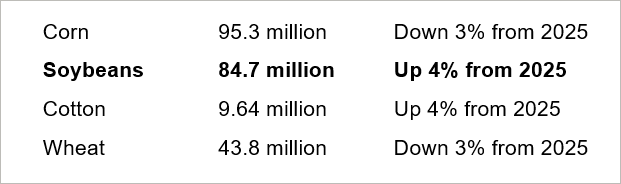
2026 prospective acreage
The tensions in the Middle East, while thousands of miles away, also have direct effects on the farm. We will likely see no physical scarcity of petroleum products and fertilizers in the U.S., but we will certainly be forced to pay more for them as we have additional global buyers bidding on a smaller supplies. It’s a dilemma which (Art tells me) brings to mind Billy Joel’s “We Didn’t Start the Fire”. If you want an illustration of the resulting volatility, just take a glance at the below oil chart. Last week we experienced very high prices and had the most aggressive weekly loss ever seen, both in the same week!
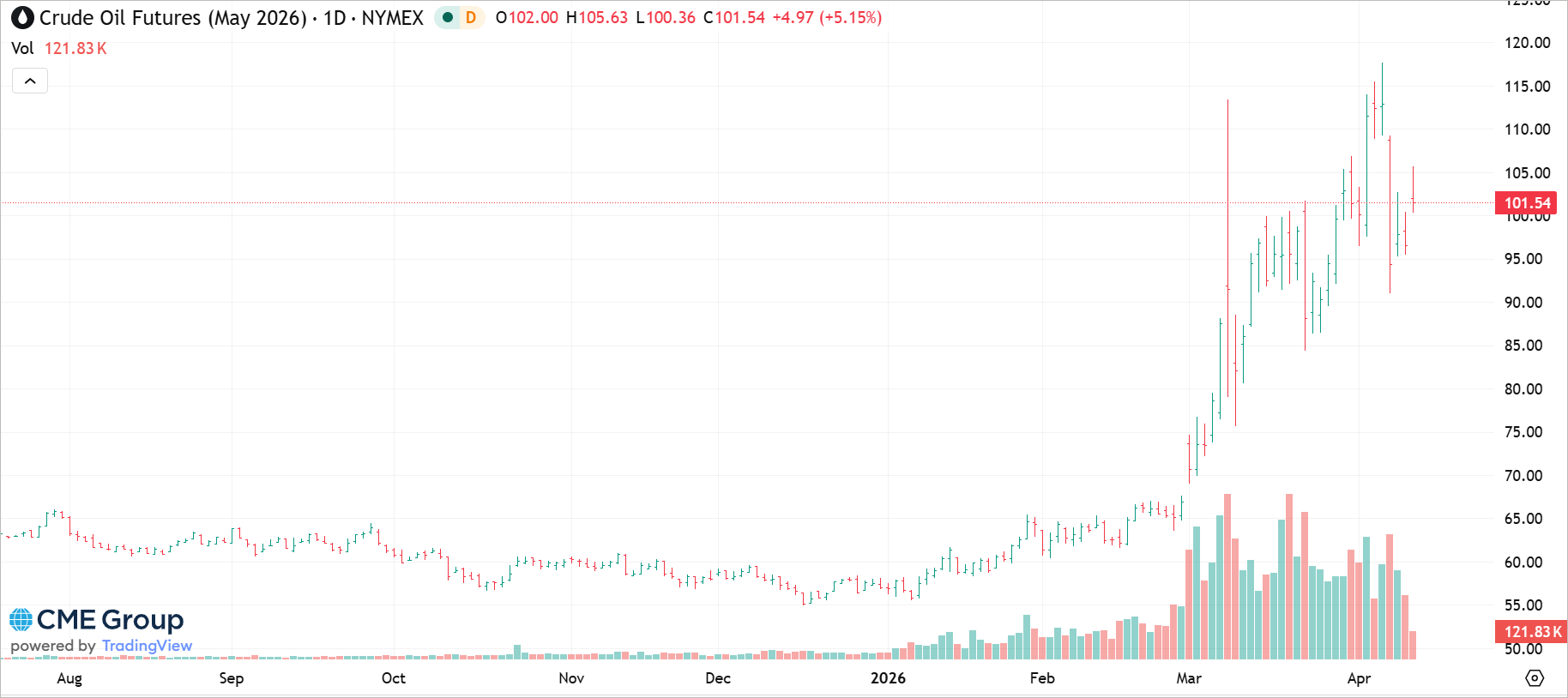
Crude oil futures, May 2026
I said, “Enough, Art, this is depressing: give me some positive vibes!” I found some hope in three little letters: M, C, and O. I had almost forgotten about this little-used crop insurance endorsement that AgriSompo spent so much time with back in July through September of last year. Of course, MCO stands for the Margin Coverage Option. It was sparsely utilized last year (the sales closing date is in September). In fact, up until a month ago, it looked like a risk management piece that might not rise above the alternatives.
If you have forgotten, MCO is slightly outside the parameters we associate with revenue-based crop insurance. It protects a theoretical margin by combining factors like yield, price and, importantly, input prices. Some of the measured input prices include natural gas, heating oil, Urea and Potash. Suddenly, I saw a way to cut through the confusion and smoke of today’s world and provide a tool that protects against the very fears producers are experiencing today!
These inputs establish a base or projected price from August 15 to September 14. Remember, these were established last year in a less volatile environment. Now comes the important part: these inputs are then assessed again from April 1 to April 30. Right in the “Eye of the Storm,” as Ryan Stevenson might sing.
As a kid, I had a grandfatherly figure with whom I would spend a lot of lazy Saturdays talking in the shade of his front-yard maple tree. He had a porch swing hanging from a branch, where he would sit smoking a pipe and whittling with his knife.
As someone who weathered the depression and some challenging droughts in the 1930s, he would often say, “My whole life, I have always prepared for drought and depression. While those two things don’t happen very often, I am going to keep preparing for them as long as I live. I will be ready if they do sneak up on me again!”
Perhaps these words from an old farmer with a sodbuster knife in his hand are far better than any advice I could ever get from artificial intelligence. Yet there is reason to be optimistic when we’re equipped with powerful risk management tools like the Margin Coverage Option. I have faith in our ability not only to weather today’s storms but also to prepare for what we don’t yet see coming. Art couldn’t help but chime in with one final song: “Don’t Stop Believing.”